 40+ Years Experience
 Locally-Sourced Materials
 Australian Quality Standard
How Window and Door Frames Influence Interior Style and Architectural Character
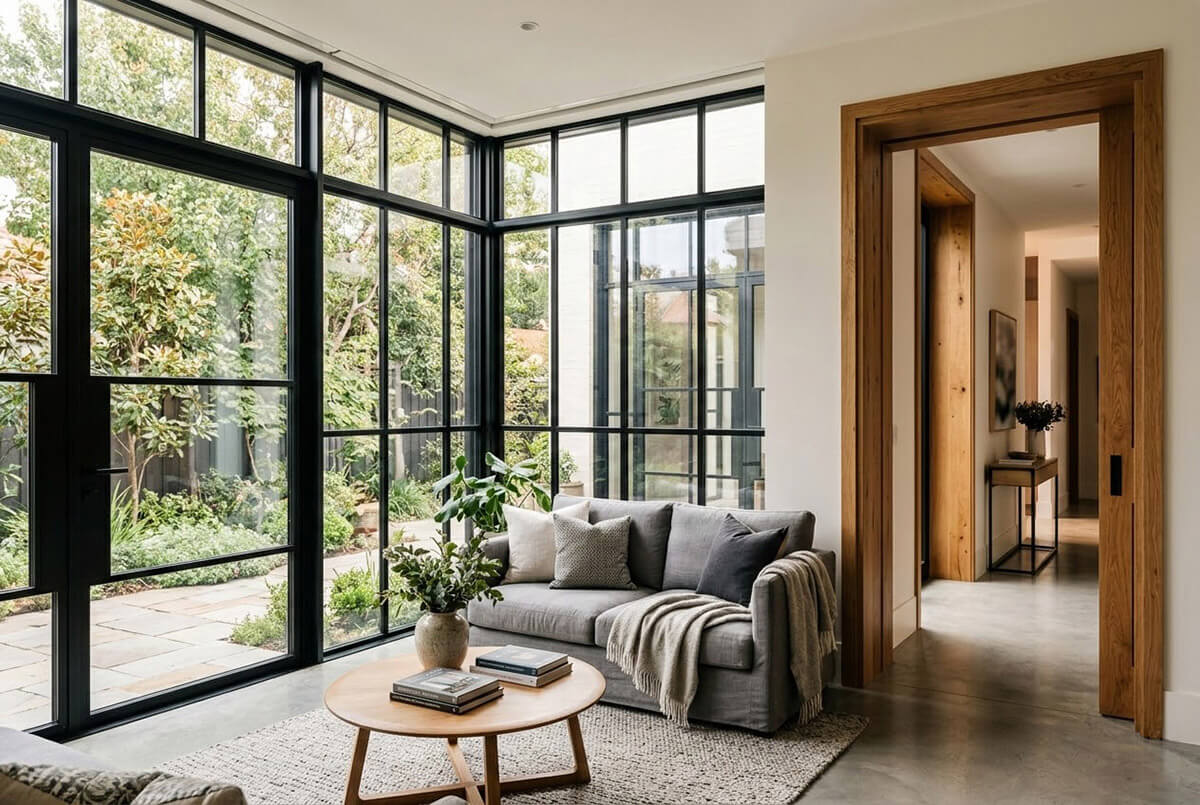 When designing or renovating a home, windows and doors are often discussed in terms of size, glazing, or performance. However, the frames themselves play an equally important role in shaping interior style and architectural character. Frame profiles, materials, and finishes subtly influence how spaces feel, how light is perceived, and how cohesive the overall design appears.
Thoughtful frame selection allows windows and doors to either stand out as architectural features or quietly support the interior design without drawing attention away from other elements.
Frame Profiles and Visual Impact
The thickness and profile of window and door frames directly affect how refined or bold a space feels. Slim frames tend to create a clean, contemporary look, while more substantial profiles can add presence and structure.
Design considerations include:
- Slim profiles that maximise visible glass and suit modern interiors
- More pronounced frames that complement heritage or character homes
- Clean lines that enhance minimalist spaces
- Defined edges that add architectural rhythm to walls
Well-proportioned frames create balance between glazing and surrounding surfaces, ensuring windows and doors feel intentional rather than oversized or underwhelming.
Material Choice and Interior Style
Frame material strongly influences the mood and personality of a home. Each material brings its own texture, finish, and visual weight, which interacts with interior furnishings and architectural details.
Common effects of different frame materials include:
- Timber frames add warmth and natural character
- Aluminium frames contribute to a sleek, modern aesthetic
- Consistent materials reinforce design continuity across rooms
- Subtle finishes allow furnishings and finishes to take focus
Matching frame materials with flooring, cabinetry, or wall finishes helps create a cohesive interior language that flows naturally throughout the home.
Colour and Finish as Design Tools
Frame colour is often underestimated, yet it can significantly shape how interiors are perceived. Neutral or muted tones allow frames to blend into walls, while darker finishes create contrast and definition.
Effective use of colour and finish can:
- Highlight window shapes and proportions
- Frame views like artwork within the space
- Complement interior palettes and textures
- Create subtle contrast without overwhelming the room
Choosing finishes that align with interior colours ensures windows and doors enhance the overall design rather than compete with it.
Framing as an Architectural Feature
In some homes, frames are designed to disappear; in others, they become key architectural elements. Both approaches are valid when executed intentionally.
Framing can be used to:
- Emphasise ceiling height through vertical lines
- Reinforce symmetry in formal living areas
- Create strong visual boundaries in open-plan spaces
- Support transitions between rooms and zones
When frames are thoughtfully integrated, they help define how spaces are experienced and navigated, contributing to a sense of order and purpose within the home.
Consistency Across the Home
One of the most important design principles is consistency. Mixing frame styles, colours, or proportions without intent can make interiors feel fragmented or unfinished.
Maintaining consistency helps:
- Create visual harmony across multiple rooms
- Support architectural coherence from inside to outside
- Strengthen the home’s overall design identity
- Ensure windows and doors feel part of a unified system
This does not mean every frame must look identical, but variations should feel deliberate and well-considered.
Long-Term Design Value
Beyond immediate aesthetics, frame choices influence how a home ages over time. Timeless profiles and finishes tend to remain visually appealing even as interior trends change.
Quality frames contribute to:
- A more enduring interior style
- Reduced need for future cosmetic updates
- Better alignment with evolving furnishings
- Stronger architectural identity
Homes with well-designed window and door frames often feel more resolved and thoughtfully planned, which enhances everyday living as well as long-term appeal.
Bringing Design and Function Together
Window and door frames sit at the intersection of design and performance. When selected carefully, they support both visual appeal and practical requirements without compromise.
By considering profile, material, colour, and consistency, homeowners can ensure frames enhance interior style while reinforcing architectural character. Rather than being an afterthought, frames become integral design elements that shape how spaces feel, function, and connect throughout the home.
In well-designed homes, window and door frames also influence how spaces feel on a human scale. The way frames meet walls, floors, and ceilings affects proportions and visual comfort. Subtle detailing around edges and junctions can elevate everyday spaces, making interiors feel considered, balanced, and intentionally designed rather than purely functional.


