 40+ Years Experience
 Locally-Sourced Materials
 Australian Quality Standard
Highlight and Clerestory Windows: Daylight Without Losing Privacy
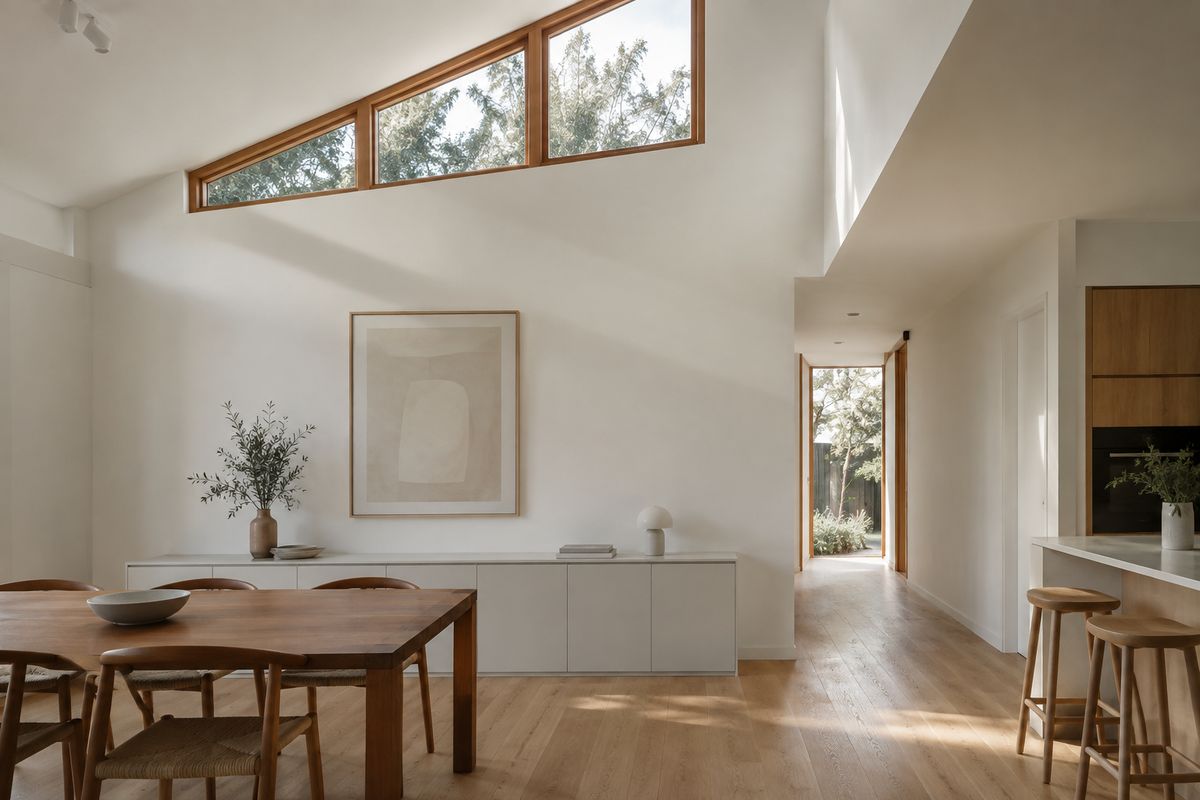 Some of the most effective windows in a home are ones you barely notice. Set high in the wall, above eye level, highlight and clerestory windows pour daylight into a room while the walls below stay free for furniture, artwork and privacy. On tight Melbourne blocks, where the house next door may be only a metre or two away, they can transform a dim space into one of the brightest in the house.
What is the difference?
The terms are often used interchangeably, but there is a useful distinction:
- Highlight windows are any windows placed high on a wall, usually above head height — a row of narrow windows above a kitchen bench or a bed, for example.
- Clerestory windows are set in a wall that rises above an adjoining roof, such as the step between two roof levels or the upper wall of a raked or skillion ceiling. They bring light down into the centre of a deep floor plan.
Both share the same principle: light comes in high, bounces off the ceiling and walls, and spreads evenly across the room with far less glare than a large window at eye level.
Daylight where it is hardest to get
Narrow Victorian and Edwardian terraces in Carlton, Northcote and Albert Park are famously dark in the middle. Long hallways and central rooms sit between party walls with no outlook at all. A clerestory in a rear extension, or highlight windows along a side wall, can bring natural light into these spaces without the overlooking issues a standard window would create.
In new builds, clerestories are a staple of passive solar design. A north-facing clerestory admits low winter sun deep into the house, where it can warm thermal mass such as a concrete slab or brick wall, while correctly sized eaves keep the high summer sun out.
Privacy without blinds
Because highlight windows sit above eye level, you get light and sky without neighbours looking in. They are ideal for:
- Bathrooms and ensuites, where they can often use clear glass instead of obscure glass.
- Bedrooms facing a street or a close neighbour.
- Kitchens, where a high window above the bench frees the wall for cabinetry.
- Living areas on side boundaries, where planning rules about overlooking limit conventional windows.
Natural ventilation that works
Warm air rises. Opening a high window lets heat escape at the top of the room, drawing cooler air in through lower windows or doors. On a summer evening after a cool change, this stack effect can flush out a hot house remarkably quickly. Awning windows are a popular choice for highlight positions because they can be left open in light rain, and our article on awning windows covers their strengths in more detail.
For windows out of easy reach, consider winders or chain operators, or electric actuators that can be linked to a rain sensor. Discuss access early so the windows are practical to open, clean and maintain.
Getting the glazing right
High windows can still bring unwanted heat. North-facing clerestories are generally the easiest to manage with eaves; east and west-facing ones may need glass with a lower solar heat gain. Double glazing reduces heat loss in winter — particularly important at ceiling height, where warm air collects — and helps control condensation on cold mornings. Our guide to energy efficient windows explains the key performance figures.
Timber frames for a crafted look
Highlight windows are often seen from below against a ceiling or a raked roof line, so the frame becomes part of the architecture. Timber frames add warmth and detail where they are most visible, and they pair beautifully with exposed timber rafters or lining boards. Timber is also a natural insulator, helping a high window perform well through Melbourne’s cold winters. Read more about the Valley Windows timber difference.
Design tips
- Align heads: lining up the tops of highlight windows with door heads or other windows keeps elevations tidy.
- Think in runs: a series of narrow units often looks better and is easier to operate than one long window.
- Consider the outside: from the street, a band of high windows can give a contemporary extension a clean, considered look — useful under heritage overlays where the new work should be recessive.
- Plan for cleaning: choose opening styles that allow you to reach both sides of the glass safely.
Work with a manufacturer from the start
Highlight and clerestory windows are usually custom sizes that respond to roof pitches and wall heights, so they are best resolved early in the design. Architects and designers can find profile and documentation information on our architects and designers page, and builders can start with our custom builders information. Homeowners are always welcome at our showrooms, where our team has been helping Melbourne homes find their light since 1983.


