 40+ Years Experience
 Locally-Sourced Materials
 Australian Quality Standard
Choosing Window Glass: Laminated, Toughened, Low-E and Obscure Explained
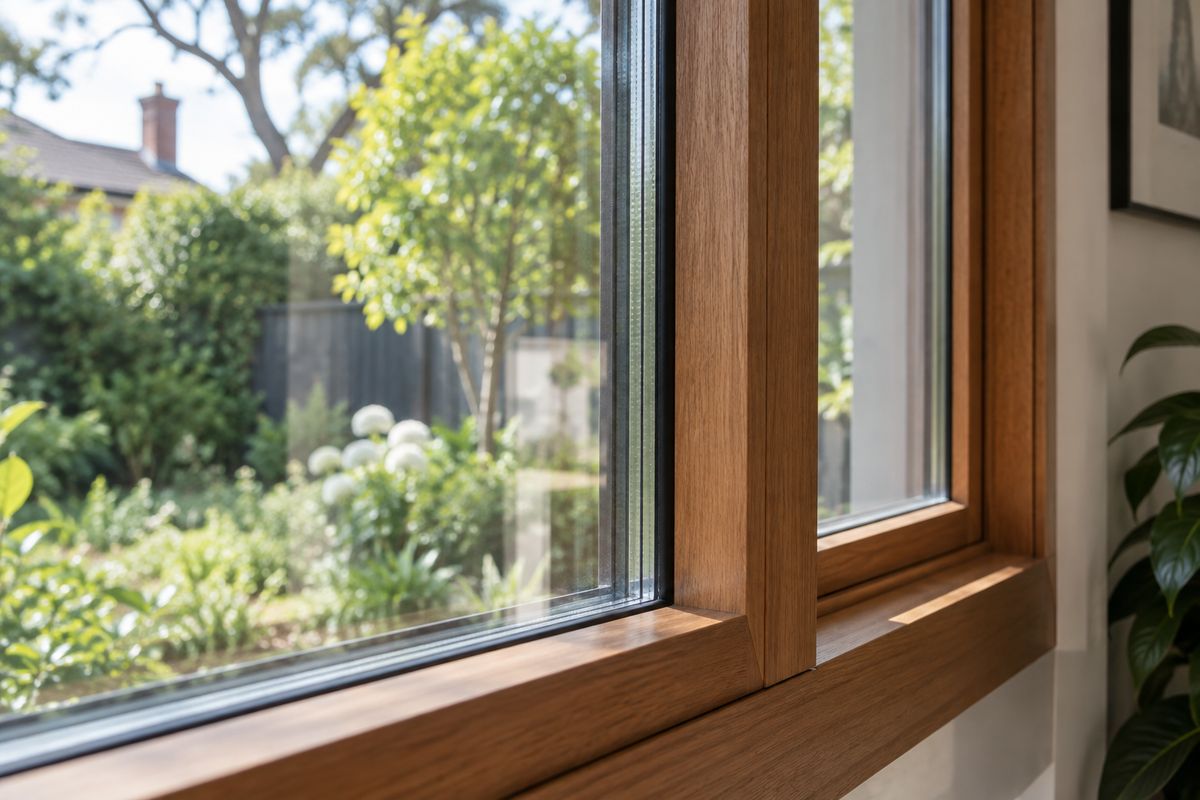 When people choose new windows, they usually spend their time on the frame — timber or aluminium, colour, opening style. Yet glass makes up most of the surface area of a window, and it decides much of how a room feels: how warm it stays in July, how much afternoon heat gets in, how much traffic noise you hear and how safe the window is if something hits it.
The good news is that modern glass gives you a lot of choice. The less good news is that the terminology can be confusing. After more than 40 years making windows and doors in Melbourne, here is our plain-English guide to the main glass types and where each one earns its place.
Standard float glass
Float glass is the basic, clear annealed glass most older homes were built with. It is affordable and optically clear, but when it breaks it forms large, sharp shards. For that reason it is restricted in areas where people could fall or walk into it, and on its own it offers little thermal or acoustic performance. Today it is most often used as one component of a better unit — for example, one pane in a double glazed window.
Toughened (tempered) safety glass
Toughened glass is heat-treated to make it several times stronger than float glass of the same thickness. If it does break, it crumbles into small, blunt granules rather than dangerous shards. It is commonly specified in doors, sidelights, low windows, bathrooms and other areas where Australian safety standards call for safety glazing.
One thing to know: toughened glass cannot be cut or drilled after it has been made, so sizes must be right the first time. That is one more reason custom-made joinery and careful measuring matter.
Laminated glass
Laminated glass sandwiches a plastic interlayer between two sheets of glass. If it cracks, the pieces stay bonded to the interlayer and the pane remains in the frame. That makes laminated glass a strong choice for:
- Security — it is much harder to break through quickly than a single sheet of float glass.
- Noise — the interlayer dampens sound vibration, and acoustic grades of laminate do this even better. Homes along busy roads in Brunswick, Footscray or Malvern often notice a real difference.
- UV protection — the interlayer blocks most UV light, helping protect floors, furnishings and artwork from fading.
We explain the noise side in more detail in our article on how the right glazing reduces noise.
Low-E glass
Low-emissivity (low-E) glass has a microscopically thin, virtually invisible coating that reflects radiant heat. Depending on the coating and which way the room faces, low-E glass can help keep winter warmth inside and reduce summer heat gain. For Melbourne’s climate — cold, damp winters and sharp hot spells in January and February — it is one of the most cost-effective upgrades you can make.
Low-E coatings are often combined with double glazing. When comparing options, look at two numbers: the U-value (lower means less heat lost through the window) and the Solar Heat Gain Coefficient, or SHGC (lower means less of the sun’s heat comes in). Our guide to energy efficient windows walks through what these figures mean in practice.
Double glazing
Strictly speaking, double glazing is a construction rather than a glass type: two panes separated by a sealed gap. But it is where the glass types above come together. A typical high-performing unit might pair a low-E pane with a laminated or toughened pane, giving insulation, safety and acoustic benefits in one window. Double glazing also keeps the inner pane warmer, which significantly reduces condensation on cold mornings.
Obscure and frosted glass
Obscure glass lets light through while blurring the view. It is ideal for bathrooms, ensuites, toilets and windows that face straight onto a neighbour — a common situation on narrow inner-suburban blocks in Richmond or Fitzroy. Patterned glass, acid-etched glass and frosted films all achieve this, with different looks. Etched glass has a smooth, satin finish that suits contemporary homes, while traditional patterns can be a lovely match for period houses.
Tinted and reflective glass
Tinted glass absorbs part of the sun’s energy and reduces glare, while reflective glass bounces it away. Both can help in exposed, west-facing rooms, but they change the colour of the light and the look of the house from the street. In heritage overlay areas, a heavy tint may not be appropriate on street-facing elevations, so it is worth checking before you commit.
Matching glass to the room
Most homes end up with a mix rather than one glass type throughout. A practical starting point:
- Living areas and bedrooms: double glazing with low-E for year-round comfort.
- Street-facing rooms on busy roads: laminated or acoustic laminate in a double glazed unit.
- Bathrooms: obscure toughened or laminated glass.
- Doors and low windows: safety glass as required, often laminated for added security.
- Large west-facing glazing: low-E with a lower SHGC, supported by eaves or external shading.
The frame matters too
Even the best glass can be let down by a poor frame. Timber is a natural insulator, so a timber frame works with high-performance glass rather than against it, and it can be built deep enough to take thicker double glazed units. If you are weighing up materials, our article on why timber windows are worth choosing covers the case in more depth.
Get advice before you specify
Glass selection is easier with samples in front of you. Visit one of our Melbourne showrooms to see and compare glass options side by side, or get in touch with our team. Since 1983, Valley Windows has helped homeowners, builders and architects choose glazing that suits the house, the orientation and the budget.


