 40+ Years Experience
 Locally-Sourced Materials
 Australian Quality Standard
Keeping West-Facing Rooms Cool Through a Melbourne Summer
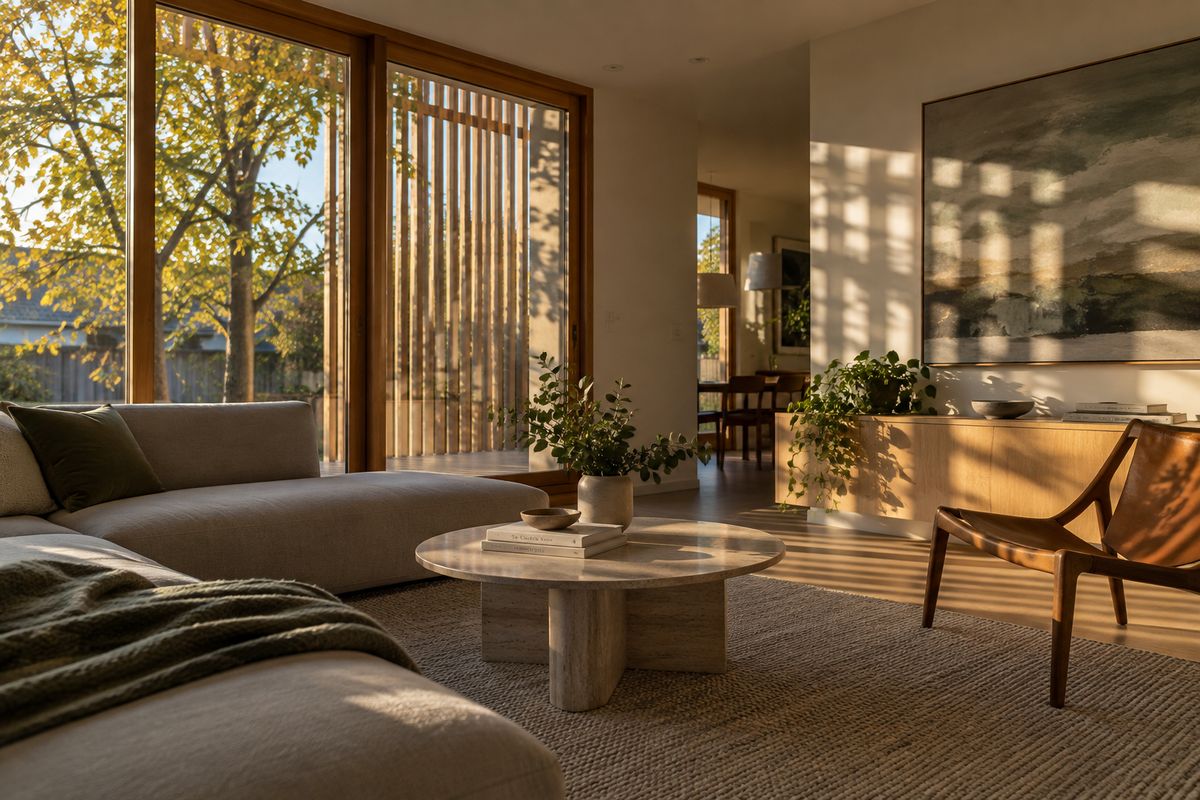 Every Melbourne homeowner with a west-facing room knows the pattern. The morning is pleasant, lunchtime is fine, and then from about three o’clock the sun swings round, pours through the glass and the room becomes almost unusable until well after dinner. On a 38-degree day in January, that late-afternoon sun can heat a room faster than an air conditioner can cool it.
West-facing windows are not a design mistake — they often capture the best views and the warm winter light. But they do need more thought than any other orientation. Here is how to keep those rooms comfortable without giving up the light.
Why the west is so difficult
North-facing windows are relatively easy to manage in Australia: the summer sun is high in the sky at midday, so a well-sized eave shades the glass while still letting the low winter sun in. Western sun is different. It arrives low and almost horizontal in the late afternoon, under eaves and straight through the glass, at exactly the time of day when the air temperature and the house itself have already been heating up for hours.
The result is that west-facing glass contributes a disproportionate share of summer heat gain. Get it right, and the whole house feels more comfortable.
Choose glass with a lower solar heat gain
The single most useful number for west-facing windows is the Solar Heat Gain Coefficient (SHGC). It measures how much of the sun’s heat passes through the window — the lower the figure, the less heat gets in. Low-E coatings designed for solar control can reduce heat gain substantially while still looking clear, so you keep the view and the daylight.
Pair that with double glazing and you also reduce heat conducted through the glass on hot days, while holding warmth inside during winter. Our guide to energy efficient windows explains SHGC and U-values in more detail, and our recent post on choosing window glass types compares the main glass options.
Shade outside, not inside
Internal blinds and curtains help with glare, but by the time the sun’s heat reaches them it is already inside the room. External shading stops it before it reaches the glass, which is far more effective. Options worth considering include:
- Vertical fins or timber battens — well suited to low western sun, and a handsome architectural feature in their own right.
- External roller or retractable blinds — lowered on hot afternoons and raised in winter.
- Pergolas with deciduous vines — shade in summer, sun in winter.
- Deciduous trees — a longer-term solution, but a lovely one. Many established gardens in Camberwell, Ivanhoe and Eltham already do this beautifully.
Think about window size and placement
If you are building or extending, you have the chance to get the fundamentals right. Large expanses of west-facing glass are the hardest to control. Consider whether the view really needs a full-height wall of glass, or whether a well-placed picture window, highlight windows or a narrower opening could frame it just as well. Our post on planning windows and doors for a home extension covers orientation and layout decisions in more depth.
Use ventilation to flush out the heat
Melbourne’s famous cool changes are your friend. When the change arrives in the evening, opening windows on both sides of the house lets the cooler air push the trapped heat out. Windows that open well matter here: casement windows catch passing breezes, awning windows can stay open in light rain, and double hung windows let warm air escape at the top while cooler air enters below.
Secure night ventilation — via restricted openings or lockable sashes — lets you keep cooling the house overnight without leaving it vulnerable.
Why the frame matters
Aluminium frames conduct heat readily unless they are thermally broken, which means a sun-baked frame can become a radiator of its own. Timber is a natural insulator, so the frame stays closer to room temperature and does not undermine the performance of the glass. That is one of the many reasons we champion timber — our article on choosing timber windows explains the full case.
Seal the gaps
Older windows often leak air around the sashes and frames. On hot days that means hot air finding its way in, and in winter it means expensive heat escaping. Modern weather seals and well-fitted sashes help the room hold whatever temperature you have worked to create.
Start with a conversation
Every west-facing room is a little different — the view, the eaves, the neighbours, the trees. Valley Windows has been making windows and doors for Melbourne homes since 1983, and we are happy to talk through glass, shading and window style for your situation. Visit one of our showrooms or contact our team to get started.


